admin
adminIn the digital age, speed and responsiveness are no longer optional—they are essential. Interactive entertainment platforms, especially those in online gaming, rely heavily on real-time data processing to deliver seamless and engaging user experiences. Without it, delays, lag, and inconsistencies can quickly drive users away.
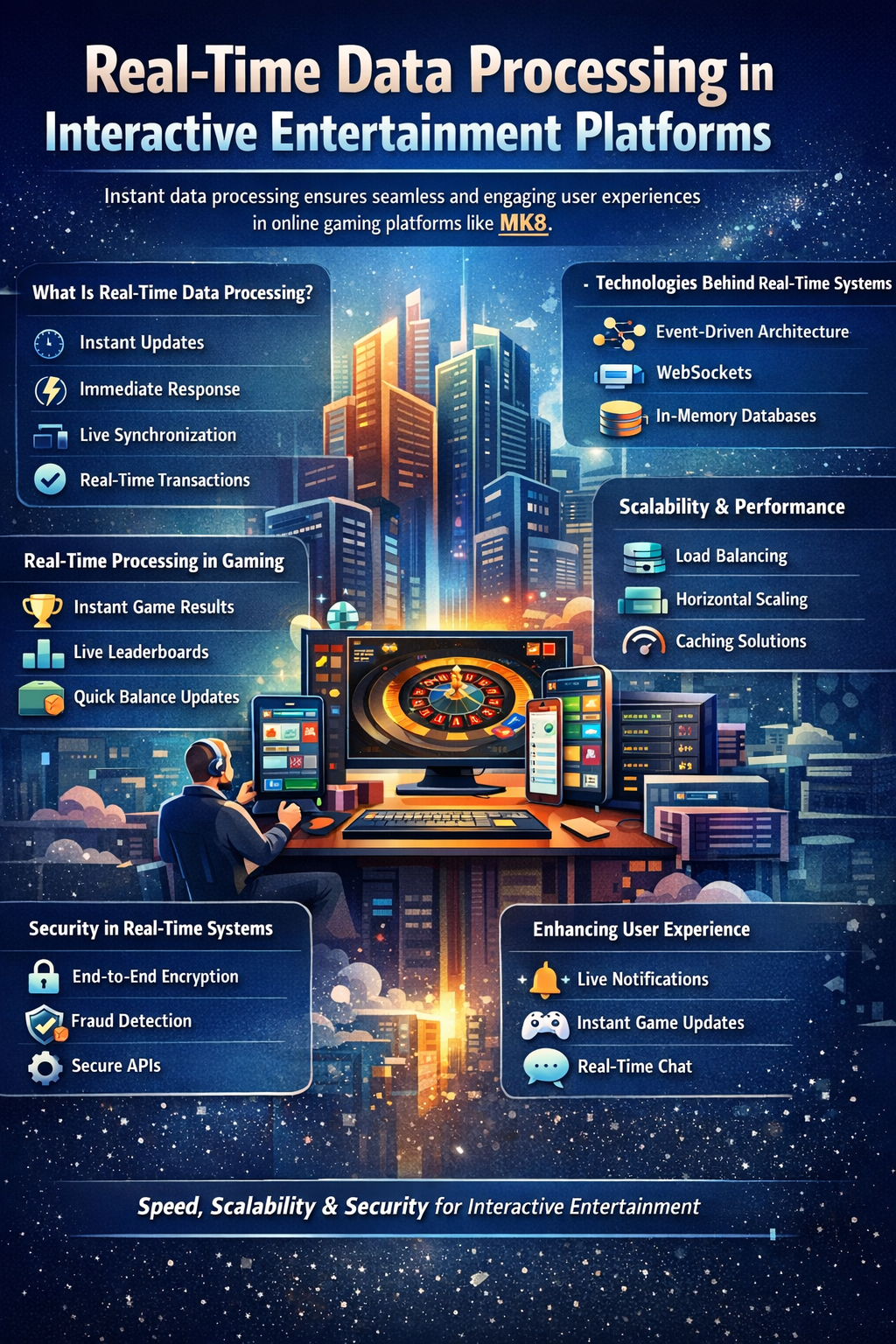
Modern systems are designed to process massive volumes of data instantly, ensuring that every action—from clicks to transactions—is reflected immediately. A strong example of this approach can be observed in MK8, where real-time infrastructure is optimized to support high-speed interactions and continuous system stability.
⚡ What Is Real-Time Data Processing?
Real-time data processing refers to the ability of a system to collect, analyze, and respond to data instantly as it is generated. Unlike traditional batch processing, which handles data in scheduled intervals, real-time systems operate continuously.
In interactive platforms, this means:
- Instant updates during gameplay
- Immediate response to user actions
- Live synchronization across devices
- Real-time transaction confirmations
This level of responsiveness is what creates a smooth and immersive user experience.
🚀 Technologies Behind Real-Time Systems
To achieve real-time performance, modern platforms rely on a combination of advanced technologies. One of the most important is event-driven architecture, where system components communicate through events rather than direct requests.
Technologies such as WebSockets allow continuous two-way communication between the client and server. This ensures that updates are delivered instantly without requiring users to refresh the page.
Additionally, in-memory databases like Redis help store frequently accessed data, significantly reducing latency. Combined with message queues such as Kafka, platforms can efficiently manage high volumes of real-time data.
🔄 Real-Time Processing in Gaming Environments
In online gaming platforms, real-time data processing is crucial for maintaining fairness, accuracy, and user engagement. Every action—whether placing a bet, joining a game, or receiving results—must be processed instantly.
For example:
- Game outcomes must be displayed without delay
- Leaderboards must update in real time
- User balances must reflect transactions immediately
Any delay can create confusion or mistrust among users. Therefore, platforms invest heavily in optimizing data pipelines to ensure zero-lag performance.
📊 Scalability and Performance Challenges
Handling real-time data at scale is not easy. Platforms must be prepared to handle sudden spikes in traffic, especially during peak hours or major events.
To address this, systems implement:
- Load balancing to distribute traffic evenly
- Horizontal scaling to add more servers as needed
- Caching layers to reduce database load
Cloud infrastructure also plays a key role by allowing platforms to dynamically allocate resources based on demand.
🔐 Security in Real-Time Data Processing
With real-time systems comes the challenge of maintaining security without slowing down performance. Sensitive data such as user information and financial transactions must be protected at all times.
Modern platforms use:
- End-to-end encryption
- Secure APIs
- Real-time fraud detection systems
AI-driven monitoring tools can detect unusual patterns instantly, helping prevent potential threats before they escalate.
📱 Enhancing User Experience Through Speed
Real-time processing is directly linked to user satisfaction. The faster a platform responds, the more engaging it becomes. Users expect instant feedback, smooth navigation, and uninterrupted interactions.
Features such as:
- Live notifications
- Instant game updates
- Real-time chat systems
all contribute to a dynamic and immersive experience. Platforms that fail to deliver this level of responsiveness risk losing users to faster competitors.
🎯 Conclusion
Real-time data processing is the foundation of modern interactive entertainment platforms. It enables instant communication, seamless interactions, and high-performance systems that meet user expectations.
As technology continues to advance, platforms that invest in real-time infrastructure will gain a significant competitive advantage. By combining speed, scalability, and security, they can deliver experiences that are not only efficient but also truly engaging.